

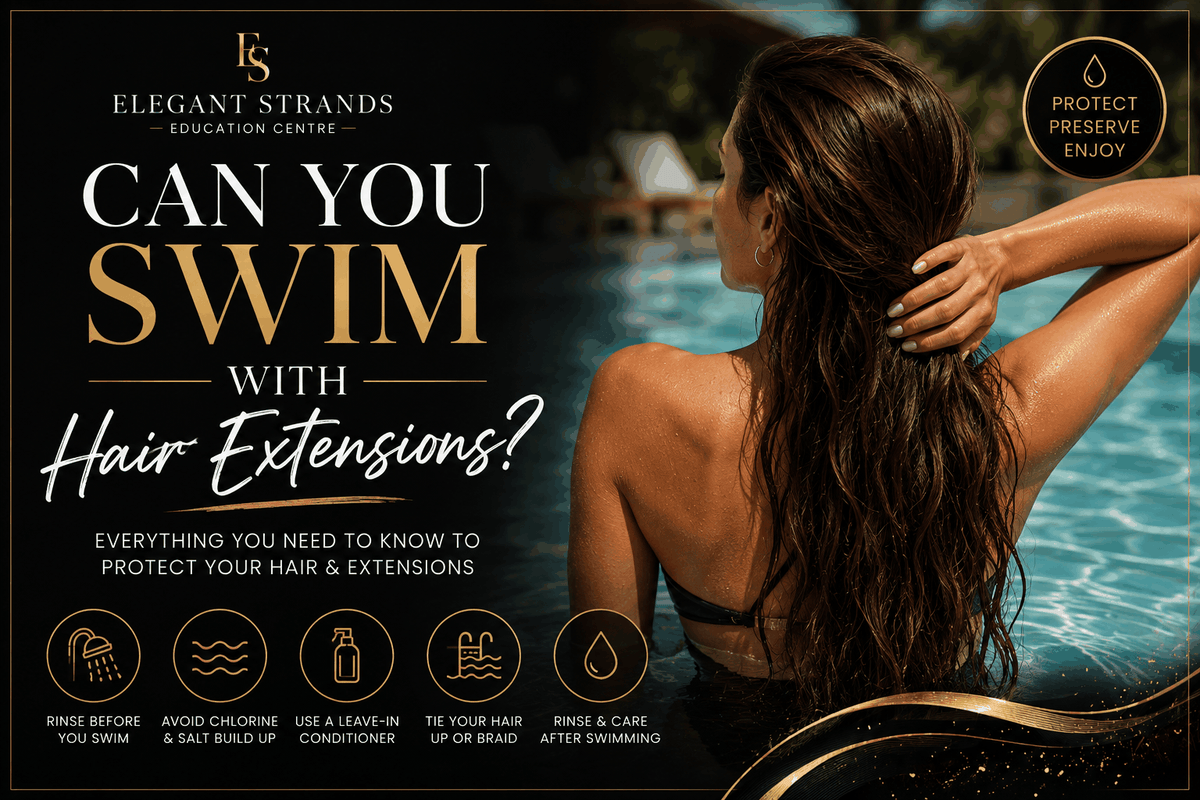
Can You Swim with Hair Extensions?
Can You Swim with Hair Extensions? Everything You Need to Know
Can you swim with hair extensions? Yes, swimming with hair extensions is possible, but it requires extra care. Chlorine, salt water, sunscreen, tangling and prolonged moisture can affect how extensions look, feel and wear over time.
Whether you're heading to the beach, spending the afternoon at the pool or planning a holiday, understanding how to protect your extensions can help reduce unnecessary dryness, tangling and damage.
At Elegant Strands, we work with different hair extension methods and know that aftercare is just as important as the installation itself.
This guide explains what to consider before swimming, how different water conditions can affect extensions and what to do afterwards.
Can You Swim with Hair Extensions in a Swimming Pool?
A common question is, can you swim with hair extensions in chlorinated pool water?
You can, but chlorine exposure can leave extension hair feeling dry, rough or difficult to manage, especially with frequent swimming.
Chlorine is used to disinfect swimming pools. Exposure can affect the condition and appearance of hair, while other factors such as sunlight, water chemistry and existing colour treatments may also contribute to changes in blonde extensions.
Because extension hair is not continuously nourished by your scalp, it can require particular attention to conditioning and detangling.
If you plan to swim regularly, speak with your extension specialist about whether your installation method and hair quality are suitable for frequent pool exposure.
Can You Swim with Hair Extensions in the Ocean?
Can you swim with hair extensions in salt water? Yes, but the ocean introduces its own challenges.
Salt water can leave hair feeling rough or dry once it evaporates. Wind, waves and friction can also encourage tangling, particularly in longer extensions.
Sand may collect around the hair and attachment areas, so gentle rinsing and careful detangling are important after a beach visit.
Ocean swimming doesn't automatically ruin extensions, but regularly exposing them to salt water without appropriate aftercare can affect their condition.
For the best results, avoid leaving salt water in your extensions for long periods after swimming.
Why Swimming Can Affect Hair Extensions
Swimming exposes hair to a combination of moisture, friction and environmental conditions.
Can you swim with hair extensions without experiencing any changes? That depends on the extension method, hair quality, colour, frequency of swimming and aftercare.
Some concerns include:
-
Dryness: Pool and ocean exposure may leave extension hair feeling less soft.
-
Tangling: Wet hair is more vulnerable to friction and knots.
-
Colour changes: Blonde and light-coloured extensions can be particularly sensitive to environmental exposure.
-
Attachment concerns: Prolonged moisture, forceful brushing or unsuitable products may affect certain attachment methods.
-
Matting: Leaving wet extensions tangled or tied tightly for extended periods can make them difficult to separate.
Not everyone will experience these problems, but taking precautions is especially worthwhile if you've invested in premium extensions.
Can You Swim with Hair Extensions? What to Do Before Swimming
Preparation can make a difference to how your extensions feel afterwards.
1. Brush Your Extensions Gently
Before entering the water, carefully remove any existing knots using a suitable extension brush.
Support the hair near the attachment points while brushing, and work from the ends upwards.
Avoid pulling directly on bonds, beads, tapes or weft attachments.
2. Rinse Your Hair with Fresh Water
Wet your hair with clean fresh water before entering a swimming pool or the ocean.
Pre-wetting may reduce how much pool or seawater the hair takes up, although it won't completely prevent exposure.
3. Secure Your Hair in a Loose Braid
A loose braid can help keep longer extensions together and reduce tangling.
Avoid tight hairstyles that place unnecessary tension on the attachment areas.
If you use a hair tie, choose one that won't snag or pull the extension hair.
4. Consider Keeping Your Hair Out of the Water
If you're spending time at the beach or pool but don't intend to swim underwater, keeping your extensions dry is one way to reduce exposure.
A suitable swimming cap may also help, although no cap guarantees completely dry hair.
5. Be Careful with Sunscreen
Some sunscreen ingredients and product residues can contribute to discolouration of certain blonde or light-coloured extensions.
Try to avoid transferring sunscreen directly onto your extension lengths, especially where your hair rests against your shoulders or back.
Follow any specific guidance provided by your hair supplier.
How to Care for Hair Extensions After Swimming
If you're wondering can you swim with hair extensions and still keep them looking beautiful, your post-swim routine is particularly important.
Step 1 — Rinse Immediately
As soon as possible after swimming, rinse your hair thoroughly with fresh, clean water.
This helps remove salt, chlorine-containing water, sand and other residues.
Step 2 — Cleanse Your Scalp
When it's time to wash, use a shampoo appropriate for your extension type.
Elegant Strands Professional's THE SILHOUETTE Hydrating Shampoo is designed for a gentle, extension-focused cleansing routine.
Apply shampoo mainly to the scalp rather than rubbing the extension lengths together.
Rinse thoroughly to avoid leaving product around attachment areas.
Step 3 — Condition the Lengths
Apply a suitable conditioner through the mid-lengths and ends, away from extension attachment points.
THE EMBRACE Nourishing Conditioner is designed to support softness, smoothness and manageability.
For extensions that feel particularly dry, THE VAULT Intensive Hair Mask can be incorporated into your conditioning routine.
Step 4 — Detangle Carefully
Be gentle when detangling wet extensions.
Support the hair, begin at the ends and gradually work upwards, following the care instructions for your particular installation method.
Don't aggressively brush through knots or pull on attachment areas.
Step 5 — Dry the Attachment Areas Thoroughly
Don't leave your extension attachment areas damp for extended periods.
Follow your extension specialist's drying instructions, and avoid sleeping with wet extensions.
Step 6 — Finish with Lightweight Hair Oil
Once you've towel-dried the hair, apply a small amount of THE ELIXIR Lightweight Hair Oil through the mid-lengths and ends.
Keep the oil away from tapes, bonds and other attachment areas unless your extension specialist advises otherwise.
Can You Swim with Tape-In Hair Extensions?
Can you swim with hair extensions installed using tape-ins?
Swimming is possible, but tape attachments need particular care.
Prolonged wetting, oils, conditioners or unsuitable products applied around tape tabs may affect their hold.
Avoid applying heavy products directly to the adhesive area, and dry your attachment points carefully after swimming.
If your tape extensions begin slipping, lifting or feeling insecure, contact your extension specialist rather than trying to repair them yourself.
Can You Swim with Weft Hair Extensions?
Can you swim with hair extensions installed using butterfly, flat, mini or invisible wefts?
Yes, although the weft rows and attachment areas require careful attention.
Rinse the hair thoroughly after swimming, gently separate the lengths and ensure the installation areas dry properly.
Avoid leaving hair tightly braided or tied up while wet for long periods.
If the extensions become difficult to separate or the row feels uncomfortable, arrange a professional check.
Can You Swim with Keratin Bond and Bead Extensions?
Can you swim with hair extensions fitted using keratin bonds, microbeads or nanobeads?
Swimming may be possible, but aftercare requirements vary by method.
Avoid excessive pulling, rubbing or tension on the attachment points, especially when the hair is wet.
Check with your installer about the recommended care routine, including whether there are restrictions immediately after installation.
Never assume all extension methods have identical swimming guidelines.
Can Swimming Turn Blonde Hair Extensions Yellow, Orange or Green?
Blonde extensions can be more sensitive to visible colour changes.
Several factors can contribute to changes in colour, including pool water chemistry, copper exposure, sunscreen residue, UV exposure, minerals and previous colouring or toning.
Green discolouration in pool-exposed hair is often associated with copper deposits rather than chlorine itself directly turning the hair green.
Orange or pinkish staining may occur with certain sunscreen products and environmental residues, particularly on light extension hair.
If your extensions change colour, don't immediately use a harsh clarifying treatment, purple shampoo or chemical toner without checking whether it's suitable for your extension hair.
Speak with your extension specialist or supplier before attempting corrective treatment.
Choosing Haircare Products After Swimming
At Elegant Strands Professional, our Four-Free Extension System™ was developed with hair extension wearers in mind.
The range is formulated without:
-
Added protein
-
Keratin
-
Silicones
-
Sulfates
-
Parabens
-
Drying alcohols
Our four complementary products are designed to support cleansing, conditioning and finishing as part of an extension-safe haircare routine.
They are also suitable for natural, coloured, bleached and chemically treated hair.
No haircare product can make extensions completely resistant to chlorine, salt water or environmental colour changes. Good aftercare and sensible swimming precautions remain important.
Explore our Elegant Strands Professional haircare collection for shampoo, conditioner, hair mask and lightweight hair oil.
For information about installation options and professional maintenance, visit our Hair Extensions Craigieburn page.
Swimming Pool Safety and Water Quality
If you're swimming in a pool, remember that appropriate pool maintenance and water quality are important for health and safety as well as overall swimming conditions.
For independent information about healthy swimming and recreational water, visit the Australian Government Department of Health, Disability and Ageing.
This information is separate from hair extension care and does not replace advice from your hair extension specialist.
Frequently Asked Questions About Swimming with Hair Extensions
Can you swim with hair extensions without damaging them?
Swimming with extensions is possible, but there is no guarantee that chlorine, salt water or repeated wetting won't affect their condition. Rinsing promptly, detangling gently and following installation-specific aftercare guidance can help reduce avoidable problems.
Should I wash my hair extensions after swimming?
Rinse your hair thoroughly with fresh water after swimming. Cleanse when appropriate using shampoo suited to your extensions, condition the mid-lengths and ends, and dry the attachment areas according to your specialist's instructions.
Can chlorine change the colour of blonde hair extensions?
Pool exposure can contribute to changes in the appearance of blonde hair extensions. Copper and other mineral deposits, water chemistry, sunscreen and environmental factors may affect colour. Seek advice before using corrective shampoos or toners.
Can You Swim with Hair Extensions? Final Advice
So, can you swim with hair extensions? Yes, but it's important to understand the risks and care for your extensions properly.
Occasional swimming may be manageable with a suitable routine, while frequent exposure to pools or seawater can require more careful maintenance.
Rinse your hair after swimming, reduce tangling, dry your attachment areas thoroughly and use products appropriate for your installation method.
If you've invested in quality hair extensions, following professional aftercare advice is one of the best ways to help maintain their appearance.
Elegant Strands Professional — Luxury Haircare, Designed for Extensions.

Written by jennylea lankester