How Often Should You Wash Hair Extensions?
How Often Should You Wash Hair Extensions? The Complete Aftercare Guide
How often should you wash hair extensions? It depends on your scalp, lifestyle, installation method and how much product you use. For many extension wearers, washing approximately once or twice a week is a practical starting point, but some people need more frequent washing while others can comfortably go longer.
The goal isn't to wash as little as possible. It's to maintain a clean, comfortable scalp while caring for your extension hair and attachment areas.
At Elegant Strands, we believe good aftercare should work with your individual needs rather than following one rule for everyone.
This guide explains how to recognise when your hair needs washing, how to wash different extensions and which habits can help keep them soft and manageable.
How Often Should You Wash Hair Extensions Each Week?
When deciding how often to wash your extensions, consider what happens between washes.
Your scalp continues producing oils and perspiration. Styling products, dust and environmental residues can also accumulate around your roots.
Extension lengths have different needs from your natural scalp hair, so it's important to balance cleansing with suitable conditioning.
A general starting point for some clients is one or two washes each week, adjusted according to scalp comfort and daily activities.
However, this isn't a fixed requirement for every person or installation method.
If your scalp becomes oily, uncomfortable or affected by buildup, you may need to cleanse sooner.
Your extension specialist can help recommend a schedule appropriate for the attachment method you're wearing.
How Often Should You Wash Hair Extensions with an Oily Scalp?
People with naturally oily scalps may need to wash more often than those with drier scalps.
Hair extensions don't stop your scalp from producing oil.
Allowing excessive oil and product residue to accumulate can leave the scalp uncomfortable and may affect certain attachment systems.
If you wear tape-in extensions, pay particular attention to your installer's recommendations about oils and adhesive areas.
A suitable extension-safe shampoo should cleanse the scalp effectively without requiring aggressive rubbing around the attachments.
If you're experiencing persistent scalp irritation, itching or flaking, seek advice from an appropriate healthcare professional rather than trying to manage the issue simply by washing less.
Should You Wash Hair Extensions Every Day?
Daily washing isn't automatically necessary for everyone wearing extensions.
Frequent washing means more time spent wetting, detangling, drying and styling the hair. Those activities can increase handling and wear, particularly when performed roughly.
However, avoiding washing despite significant sweat, oils or buildup isn't necessarily better.
Whether daily or frequent washing is appropriate depends on your scalp and extension method.
Ask your specialist if you're unsure about the best balance.
How often should you wash hair extensions when exercising daily? You may need to adjust your routine to keep your scalp comfortable, but that doesn't always require a complete shampoo wash after every activity.
Can You Leave Hair Extensions Unwashed for Too Long?
Going too long between washes may allow oils, perspiration and styling products to build up.
This can make the scalp feel uncomfortable and may complicate cleaning around attachment areas.
Buildup can also contribute to hair feeling heavy or difficult to manage.
There isn't a universal number of days after which extensions become unsafe or damaged.
Instead, pay attention to your scalp, the condition of your hair and any guidance from your installer.
If your hair or scalp needs cleansing, don't ignore that simply because you want to preserve your extensions.
How Often Should You Wash Tape-In Hair Extensions?
Tape-ins require special care around adhesive tabs.
Avoid applying oils, conditioners or masks directly onto the tape areas unless your specialist specifically recommends doing so.
When washing, cleanse the scalp gently and rinse carefully around the attachments.
Dry the tape areas thoroughly after washing.
Your installer may also recommend waiting a particular period before the first wash after installation, depending on the adhesive system used.
Follow those instructions rather than relying on general advice for another extension method.
How Often Should You Wash Weft Hair Extensions?
Butterfly, flat, mini and invisible wefts can all require careful washing around their installed rows.
The number of washes should reflect your scalp's needs and your stylist's recommendations.
When cleansing:
-
Separate the hair into manageable sections.
-
Wash the scalp carefully around the rows.
-
Avoid aggressively rubbing or tangling the lengths.
-
Rinse away product thoroughly.
-
Make sure the attachment areas are dried properly.
Leaving weft rows damp for extended periods can make them more difficult to manage.
If you notice discomfort or matting beneath the rows, arrange a professional check.
Washing Keratin Bonds, Microbeads and Nanobeads
Individual attachment methods have their own aftercare considerations.
For keratin bonds, avoid heavy conditioning products or oils directly around the bonds unless your specialist recommends otherwise.
For microbeads and nanobeads, take care not to pull or twist the attachment areas during washing and drying.
With all methods, use gentle handling and follow the guidance provided at installation.
How often should you wash hair extensions fitted with individual bonds or beads? Again, your scalp and lifestyle determine cleansing needs, while the attachment method affects how you should wash them.
Signs Your Hair Extensions Need Washing
Instead of focusing only on the calendar, look for signs that cleansing would be helpful.
These may include:
-
An oily or uncomfortable scalp.
-
Visible styling product buildup.
-
Perspiration after exercise.
-
Hair feeling unusually heavy at the roots.
-
Dirt or residue after outdoor activities.
-
A need to refresh your regular scalp-care routine.
Some people naturally produce more scalp oil than others.
The important thing is to cleanse gently and thoroughly when needed.
Why Washing Technique Matters as Much as Frequency
Even a suitable washing schedule can be undermined by aggressive handling.
Hair extensions may become tangled when the lengths are rubbed together, twisted into a bundle or piled on top of the head during washing.
Poor rinsing can leave product around attachment areas.
And going to bed with wet extensions can increase the likelihood of tangling or matting.
The right washing technique is just as important as choosing a suitable shampoo.
How to Wash Hair Extensions Correctly
Step 1 — Brush Before Washing
Gently remove existing knots using a suitable extension brush.
Support the hair near the attachments and begin at the ends before gradually working upwards.
Step 2 — Wet the Hair Thoroughly
Use lukewarm water and allow the extensions to hang naturally downwards.
Avoid piling the hair onto the top of your head.
Step 3 — Shampoo Your Scalp
Apply shampoo to your scalp rather than aggressively scrubbing the extension lengths.
Massage carefully around rows, tapes, bonds or beads.
Step 4 — Rinse Thoroughly
Let water move down through the hair, removing shampoo and residue.
Avoid unnecessary twisting and rubbing.
Step 5 — Condition the Lengths
Apply a compatible conditioner or mask to the mid-lengths and ends.
Keep heavy conditioning products away from the attachment areas unless your stylist instructs otherwise.
Step 6 — Dry the Extensions Carefully
Gently blot away excess water.
Detangle according to your extension method's care instructions and dry the attachment areas thoroughly.
Avoid sleeping with wet extensions.
Choosing Shampoo for Hair Extensions
A shampoo suitable for extensions should clean the scalp while fitting the aftercare requirements of the extension hair and installation method.
Some people prefer sulfate-free formulas, while others follow specific recommendations from their supplier.
No single ingredient determines whether a shampoo is suitable for every extension wearer.
The complete formulation, application method and condition of the hair all matter.
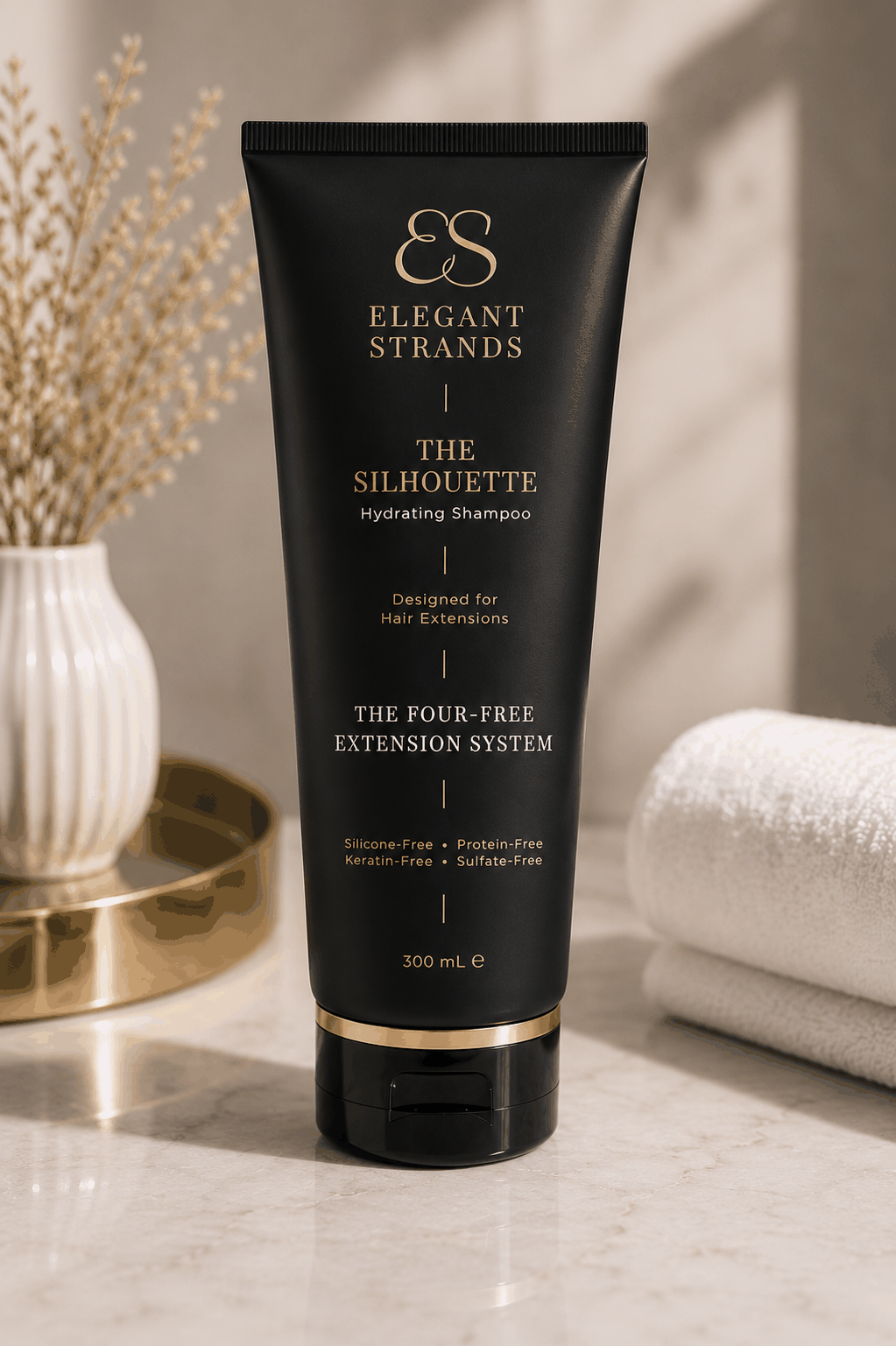
Elegant Strands Professional was developed with extension aftercare in mind.
Our Four-Free Extension System™ is formulated without added protein, keratin, silicones, sulfates, parabens or drying alcohols.
These are our formulation choices, not evidence that every product containing these ingredients is harmful.
Meet the Elegant Strands Professional Haircare Range
Our professional collection contains four complementary products.
THE SILHOUETTE — Hydrating Shampoo | 300 mL
A hydrating shampoo designed to cleanse the scalp as part of a regular extension-safe washing routine.
THE EMBRACE — Nourishing Conditioner | 300 mL
A nourishing conditioner developed to soften and smooth the mid-lengths and ends.
THE VAULT — Intensive Hair Mask | 250 mL
An intensive treatment designed to nourish dry-feeling lengths and support easier manageability.
THE ELIXIR — Lightweight Hair Oil | 100 mL
A lightweight finishing oil designed to smooth the appearance of frizz and add shine.
Together, these products create THE COMPLETE RITUAL.
Explore our Elegant Strands Professional Haircare Collection for more information.
The Complete Elegant Strands Haircare Ritual
When using our complete four-product collection, we recommend this routine.
Step 1 — Shampoo twice: Cleanse your scalp using THE SILHOUETTE, rinse thoroughly and repeat.
Step 2 — Apply the mask: Use THE VAULT on the mid-lengths and ends, avoiding attachments, then rinse.
Step 3 — Follow with conditioner: Apply THE EMBRACE through the lengths and rinse thoroughly.
Step 4 — Finish with oil: Apply a small amount of THE ELIXIR to towel-dried mid-lengths and ends before blow-drying and styling.
For subsequent washes, alternate the mask and conditioner according to your hair's needs.
The aim is to keep the routine straightforward without unnecessarily overloading the extension hair with products.
How to Dry Hair Extensions After Washing
Drying is an essential part of extension aftercare.
After washing:
-
Gently squeeze out excess water.
-
Blot the hair with a towel instead of rubbing.
-
Carefully detangle where appropriate for your extension method.
-
Use suitable heat settings when blow-drying.
-
Make sure the extension attachments and surrounding natural hair are thoroughly dry.
-
Avoid sleeping while the installation areas are damp.
If you wear wefts, pay extra attention to the hair beneath each row.
Leaving damp hair trapped around attachments can increase tangling.
Does Washing Too Often Damage Hair Extensions?
Washing itself doesn't automatically damage extensions.
However, frequent aggressive brushing, rough washing, repeated high-heat drying or unsuitable products may contribute to wear over time.
The solution isn't simply to avoid washing.
It's to use appropriate techniques and maintain a washing frequency that keeps your scalp comfortable.
If your extensions feel unusually rough after every wash, consider reviewing the hair quality, conditioning products and styling routine with your specialist.
What About Dry Shampoo Between Washes?
Dry shampoo can temporarily absorb oils and refresh the appearance of the roots, but it doesn't replace proper scalp cleansing.
Repeated use may leave residue, including around extension attachment areas.
If you use dry shampoo, choose one compatible with your installation method and follow its directions.
Don't use it as a reason to leave your scalp unwashed when it needs cleansing.
Washing Hair Extensions After Swimming or Exercise
Swimming pools, seawater and heavy perspiration may require additional care.
Rinse your extensions with fresh water after exposure to chlorine or salt water.
Avoid leaving pool or seawater in the hair for prolonged periods.
If your scalp is sweaty after exercise, consider whether a gentle wash is appropriate for your routine.
Always dry the attachment areas thoroughly after wetting.
Learn more about our installation and maintenance services through our Hair Extensions Craigieburn page.
Understanding Haircare Ingredients and Product Claims
When choosing products, consider the complete formulation and the recommendations for your extension method.
A shampoo's marketing description doesn't always explain how it will perform on every hair type.
For independent Australian information about cosmetic ingredient labelling, visit the Australian Industrial Chemicals Introduction Scheme (AICIS).
If you are unsure whether a shampoo is compatible with your attachments, ask your extension specialist before using it.
Frequently Asked Questions About Washing Hair Extensions
How often should you wash hair extensions?
Many clients find that washing approximately once or twice a week works as a starting point, but individual needs vary. Your scalp, exercise routine, product use and extension installation method should guide your washing schedule.
Should you wash hair extensions every day?
Daily washing isn't necessary for everyone, although some people may need to cleanse more frequently because of their scalp or lifestyle. Gentle techniques, suitable products and thorough drying are important whenever you wash.
Can leaving extensions unwashed cause tangling?
Excessive oil and product buildup can make hair difficult to manage, but tangling also depends on brushing, friction, hair quality and maintenance. Cleanse your scalp when needed, detangle gently and follow your installer's aftercare guidance.
How Often Should You Wash Hair Extensions? Final Advice
How often should you wash hair extensions? There isn't one correct answer for every person.
For some people, once or twice a week is a convenient starting point. Others may need a different schedule based on scalp oil, exercise, styling products or their installation method.
Focus on gentle scalp cleansing, thorough rinsing, suitable conditioning and properly drying your extension attachments.
Regular professional maintenance and careful daily handling also play important roles in keeping extensions comfortable and manageable.
At Elegant Strands, our goal is to help clients establish practical haircare routines that support both their extensions and natural hair.
Elegant Strands Professional — Luxury Haircare, Designed for Extensions.

Written by jennylea lankester