How to Brush Hair Extensions Without Causing Damage
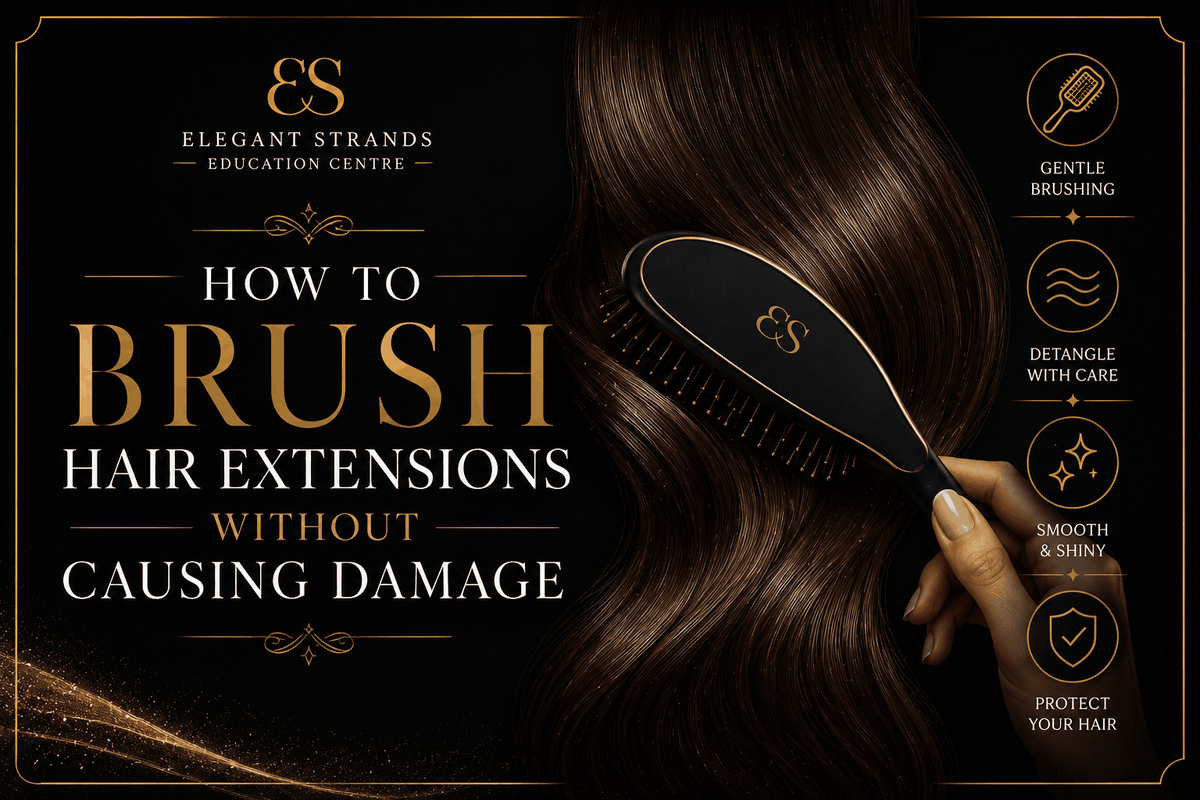
How to Brush Hair Extensions Without Causing Damage
Learning how to brush hair extensions correctly is one of the most important parts of keeping your extensions looking beautiful while protecting your natural hair.
Whether you wear butterfly wefts, flat wefts, invisible wefts, tape-ins, keratin bonds, microbeads or nanobeads, using the right brushing technique can help reduce tangling, pulling and unnecessary tension around your attachments.
At Elegant Strands, we see how much difference a consistent aftercare routine can make. Your extensions should be manageable and comfortable, and brushing shouldn't involve ripping through knots or placing pressure on your natural hair.
This guide explains how to brush extensions safely, which areas need extra attention and when tangling may require professional help.
How to Brush Hair Extensions Correctly
When learning how to brush hair extensions, the most important rule is to start at the ends and gradually work upwards.
Brushing from the roots straight down can push existing knots together, making them tighter and harder to remove.
Follow these steps:
-
Divide your extensions into manageable sections.
-
Hold each section securely above the area you're brushing, supporting the hair without pulling on attachments.
-
Start with the bottom few centimetres of the extension lengths.
-
Use short, gentle brush strokes to remove small tangles.
-
Gradually move towards the mid-lengths as the ends become smooth.
-
Finish carefully near the roots, avoiding direct pressure on bonds, beads, tapes or weft rows.
-
Check the underneath layers to make sure you haven't missed any knots.
Take your time. If the brush catches, stop and work through the knot gently instead of pulling harder.
Why Brushing Hair Extensions Properly Matters
Hair extensions can become tangled through normal daily movement, particularly when they rub against clothing, scarves and bedding.
Because extension hair doesn't receive the same ongoing distribution of natural scalp oils as your own growing hair, the lengths can also become dry or rough-feeling over time.
Incorrect brushing may contribute to:
-
Tangling and matting.
-
Unnecessary pulling on attachment areas.
-
Breakage in natural hair or extension lengths.
-
Discomfort around the scalp.
-
Loosening or movement of certain attachments.
-
Difficulty separating extension rows.
Knowing how to brush hair extensions is about more than appearance. Gentle handling also helps you avoid unnecessary mechanical stress on your natural hair.
What Brush Should You Use for Hair Extensions?
Choosing a suitable brush depends on your extension method.
Many extension wearers use brushes specifically designed to glide through the lengths without catching on attachment hardware.
A flexible detangling brush or suitable extension brush may work well for the mid-lengths and ends.
However, not every brush is appropriate for brushing directly around bonds, beads or tapes.
Check with your installer about the best brush for your particular method.
A brush that feels comfortable on natural hair isn't necessarily suitable for every installed extension type.
Avoid brushes that repeatedly snag the attachment points or require excessive force to move through the hair.
How to Brush Hair Extensions Without Pulling on the Roots
The area near your scalp needs extra attention because your natural hair supports the extension attachments.
When brushing near the roots:
-
Support the hair and attachments with one hand.
-
Use gentle, controlled movements.
-
Avoid dragging the brush across beads, keratin bonds or tape tabs.
-
Separate the hair around weft rows as recommended by your stylist.
-
Stop if you feel sharp pulling or discomfort.
The aim is to keep the natural hair manageable without disturbing the attachments.
If you notice tightness, repeated snagging or visible breakage around an extension, arrange a professional assessment.
How to Brush Butterfly Weft and Flat Weft Extensions
Butterfly, flat, invisible and mini wefts require particular care around the installed rows.
The lengths can generally be brushed using a suitable extension brush, but the attachment areas should be treated gently.
Lift the hair in sections so you can reach the underneath layers.
Support the hair near the row while brushing the lengths from the ends upwards.
Avoid forcing the brush through the weft attachment itself.
Pay attention to the hair underneath the rows, especially around the nape of the neck.
If the natural hair becomes tangled near the attachments, contact your extension specialist rather than trying to pull the knots apart.
How to Brush Tape-In Hair Extensions
Tape-in extensions are attached using adhesive tabs.
It's important to avoid snagging the tabs or pulling the extensions away from the natural hair.
When brushing tape-ins:
-
Separate the hair into sections.
-
Support the hair near each attachment.
-
Brush the ends first.
-
Work upwards slowly.
-
Use care around the tape tabs.
-
Avoid aggressive brushing against the adhesive areas.
If a tape begins slipping or lifting, don't try to secure it by applying more pressure.
Arrange maintenance with your installer.
How to Brush Keratin Bond Hair Extensions
Keratin bonds are individual attachment points that require gentle handling.
Brushing aggressively against the bonds can cause discomfort or interfere with the installation.
Use a brush recommended for your particular bond method.
Work through the extension lengths first and carefully manage the hair around each attachment without dragging the brush across the bond.
Individual bonds may also need gentle separation according to your stylist's aftercare instructions.
If bonds become tangled together or twist around neighbouring hair, have them checked professionally.
Brushing Microbead and Nanobead Extensions
Microbeads and nanobeads can catch on unsuitable brushes.
Use gentle brush strokes around the scalp, avoiding forceful contact with attachment hardware.
Support the hair above the section you're detangling and keep the extension lengths separated.
As natural hair grows, attachments may move or twist.
If you notice repeated pulling, tangling or beads sitting awkwardly, book maintenance rather than attempting to reposition them yourself.
How Often Should You Brush Hair Extensions?
There isn't one brushing frequency that works for every person.
Your extension length, thickness, daily activities and natural hair type all make a difference.
For many clients, gently brushing in the morning and before bed is a useful starting point.
You may also need to detangle after activities that create friction, such as exercise or windy weather.
The goal is to remove small knots before they develop into larger tangles.
Avoid repeatedly dragging a brush over the same section simply because you feel you need to brush constantly.
How to Brush Hair Extensions When They're Wet
Wet hair can be more vulnerable to stretching and mechanical damage, so take particular care after washing.
Some extension methods and hair suppliers have specific wet-detangling recommendations.
Follow those instructions first.
If wet detangling is appropriate for your extensions:
-
Gently squeeze out excess water.
-
Avoid aggressively rubbing with a towel.
-
Support the hair near the attachment areas.
-
Use an appropriate detangling brush or comb.
-
Begin at the ends and work upwards.
-
Stop if you encounter resistance.
-
Dry attachment areas thoroughly afterwards.
Never force a brush through wet, matted extensions.
How to Brush Hair Extensions Before Washing
Brushing before washing helps remove existing knots so they don't tighten as the hair gets wet.
Separate the lengths into manageable sections and gently work through each one.
Check the nape of the neck, underneath layers and any areas that rub against clothing.
If you discover severe knots close to the scalp, it's better to ask your extension specialist for help before washing.
Once the hair is detangled, you can proceed with your regular washing routine.
Why Hair Extensions Tangle at the Nape
The nape of the neck is one of the most common areas for extension tangling.
This area experiences friction from collars, scarves, bedding and everyday movement.
Long extensions may also become trapped underneath your shoulders while sleeping.
To help manage nape tangling:
-
Lift the top layers and brush underneath them.
-
Remove small knots daily.
-
Keep your hair dry before going to sleep.
-
Consider a loose braid at bedtime.
-
Avoid tight hairstyles that pull on the attachments.
-
Book maintenance when recommended.
If matting develops near the scalp, arrange professional assistance.
Can the Wrong Brush Damage Hair Extensions?
An unsuitable brush can snag attachments or make detangling unnecessarily difficult.
However, damage isn't always caused by the brush itself.
Excessive force, poor brushing technique, tangled hair quality, attachment placement and delayed maintenance can all play a role.
If your extensions repeatedly catch or feel difficult to brush, don't automatically assume the problem is your technique.
Speak with your stylist about the hair quality, installation and suitable aftercare tools.
Using Haircare Products to Improve Manageability
When extensions feel dry or rough, appropriate conditioning may help improve softness and manageability.
Elegant Strands Professional was developed with extension aftercare in mind.
Our Four-Free Extension System™ is formulated without:
-
Added protein
-
Keratin
-
Silicones
-
Sulfates
-
Parabens
-
Drying alcohols
These are formulation choices rather than proof that every product containing those ingredients is harmful.
Our collection includes four complementary products.
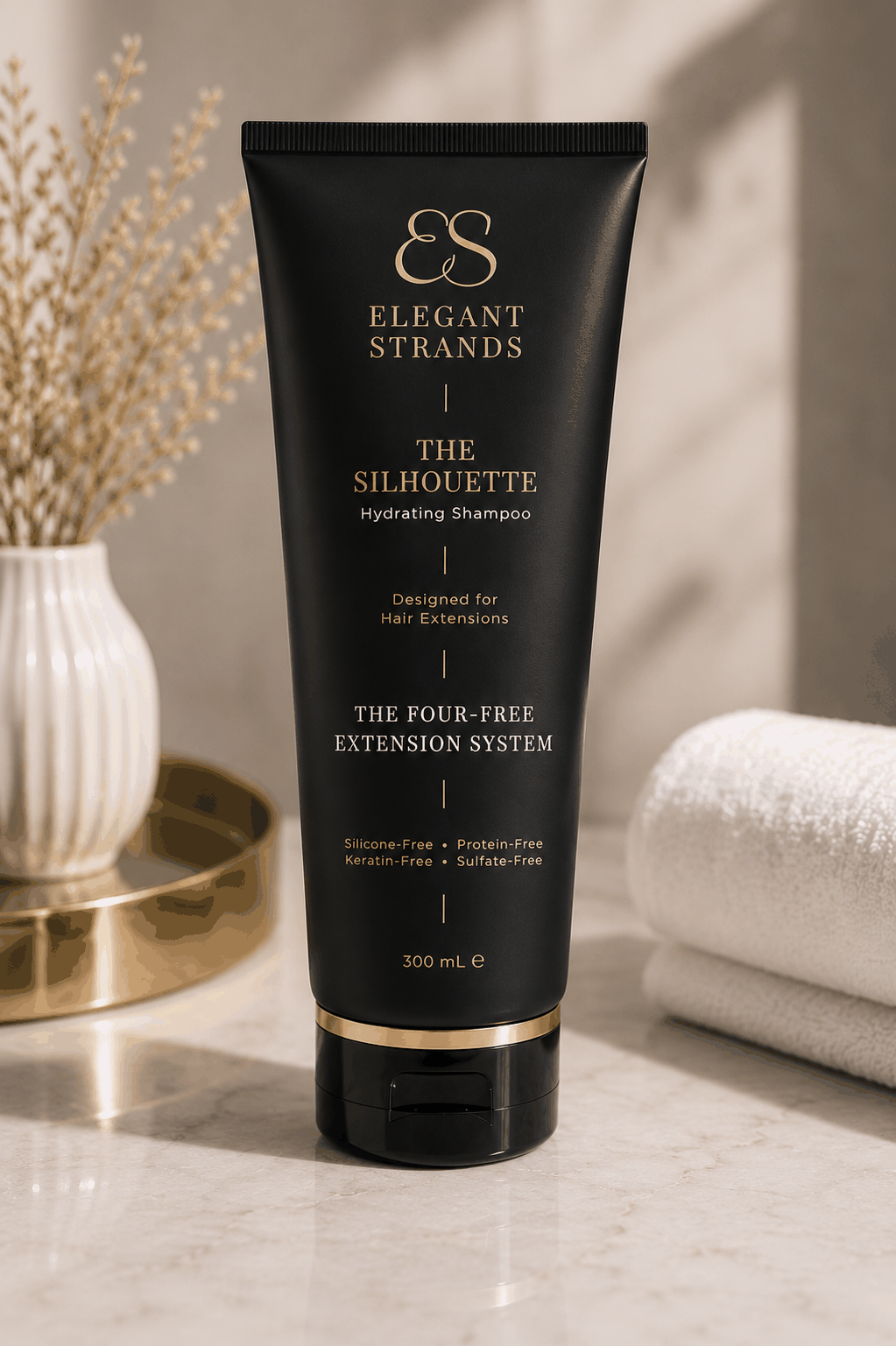
THE SILHOUETTE — Hydrating Shampoo
A 300 mL hydrating shampoo designed to cleanse the scalp.
THE EMBRACE — Nourishing Conditioner
A 300 mL conditioner designed to soften the mid-lengths and ends.
THE VAULT — Intensive Hair Mask
A 250 mL intensive conditioning treatment developed for dry-feeling hair.
THE ELIXIR — Lightweight Hair Oil
A 100 mL finishing oil designed to help smooth the appearance of frizz and add shine.
Discover our Elegant Strands Professional Haircare Collection.
The Elegant Strands Haircare Routine
Suitable products and gentle brushing work together as part of a consistent aftercare routine.
When using THE COMPLETE RITUAL, follow these steps.
Step 1 — Shampoo twice: Use THE SILHOUETTE to cleanse the scalp, rinsing after each wash.
Step 2 — Apply the mask: Apply THE VAULT through the mid-lengths and ends, avoiding extension attachment areas, then rinse.
Step 3 — Follow with conditioner: Apply THE EMBRACE to the lengths and ends and rinse thoroughly.
Step 4 — Finish with oil: Apply a small amount of THE ELIXIR to towel-dried lengths before styling.
For later washes, alternate the mask and conditioner according to your hair's needs.
Keep conditioners, masks and oils away from extension attachment areas unless your specialist recommends otherwise.
Brushing Hair Extensions Before Bed
A gentle bedtime brushing routine may help reduce overnight tangling.
Make sure your extensions are dry before sleeping.
Brush through the lengths, paying particular attention to the underneath sections.
A loose braid can help keep longer hair together while you sleep.
Avoid tight buns, ponytails or braids that pull on the attachment areas.
If your hair is already tangled, detangle it carefully before securing it for the night.
When Should You Seek Professional Help with Tangled Extensions?
Some tangles can be managed at home through gentle brushing.
However, severe matting close to the scalp should not be forcefully brushed out.
Seek professional assistance if you notice:
-
Persistent pulling around attachments.
-
Tangling that keeps returning immediately.
-
Matting around weft rows, tapes, bonds or beads.
-
Unusual discomfort or scalp tenderness.
-
Visible breakage in natural hair.
-
Attachments that have twisted or slipped.
The safest solution may involve maintenance, repositioning or professional removal.
Learn more through our Hair Extensions Craigieburn services.
Understanding Hair Extension Care and Consumer Information
Hair extension suitability and maintenance requirements depend on the installation method, hair quality and individual circumstances.
Different hair suppliers may recommend different brushes and care routines.
For independent information about consumer rights relating to haircare products and services in Australia, visit the Australian Competition and Consumer Commission.
Always follow your extension specialist's advice when caring for attachment points.
Frequently Asked Questions About Brushing Hair Extensions
How often should I brush my hair extensions?
Many people find that gently brushing in the morning and before bed helps prevent tangling. The ideal frequency depends on your extension length, hair type and routine. Use a suitable extension brush and avoid pulling on attachment areas.
Should I brush hair extensions when they're wet?
Wet detangling depends on your hair and installation method. Follow your extension supplier's instructions. If wet brushing is appropriate, support the hair, use a suitable tool and work gently from the ends upwards without pulling at attachments.
What should I do if my hair extensions are badly tangled?
Avoid forcefully brushing through severe knots, especially if they're close to your scalp. A professional extension specialist can assess the tangling and recommend safe detangling, maintenance or removal if necessary.
How to Brush Hair Extensions: Final Advice
Learning how to brush hair extensions correctly can help reduce tangling, pulling and unnecessary damage.
The most important habits are simple: use a suitable brush, work from the ends upwards, support your natural hair and treat attachment areas gently.
Keep your extensions dry before bed, remove small knots regularly and attend professional maintenance appointments when recommended.
If your extensions become painful, severely matted or difficult to manage, seek professional assistance rather than forcing a brush through them.
At Elegant Strands, we want clients to enjoy beautiful extensions while looking after their natural hair.
Elegant Strands Professional — Luxury Haircare, Designed for Extensions.

Written by jennylea lankester