How to Sleep with Hair Extensions
How to Sleep with Hair Extensions: The Complete Night-Time Care Guide
Knowing how to sleep with hair extensions is an important part of looking after your investment. Whether you've just had your first set installed or you've been wearing extensions for years, what you do before bed can make a difference to how your hair looks and feels the following morning.
Sleeping with extensions doesn't have to be uncomfortable or complicated. However, going to bed with wet hair, tight hairstyles or existing tangles can lead to unnecessary pulling, knots and matting.
At Elegant Strands, we want clients to enjoy their extensions while taking good care of their natural hair. This guide covers the best bedtime habits for different extension methods, including butterfly wefts, flat wefts, tape-ins, keratin bonds, microbeads and nanobeads.
How to Sleep with Hair Extensions Without Tangling
The most important part of a night-time routine is reducing friction, tension and tangling.
While you're sleeping, your hair moves against your pillow, bedding and clothing. Longer extensions can become caught underneath your body or rub against themselves, particularly around the nape of your neck.
A few simple habits can help:
-
Brush your extensions gently before bed.
-
Make sure the hair and attachment areas are dry.
-
Secure the lengths in a comfortable, loose hairstyle.
-
Avoid tight ponytails and buns that pull on the attachments.
-
Keep your hair from becoming trapped underneath you.
-
Follow your extension specialist's individual aftercare instructions.
Learning how to sleep with hair extensions is less about finding one perfect hairstyle and more about creating a routine that protects the hair and attachments.
Why Hair Extensions Can Tangle Overnight
Hair extensions may tangle while you sleep because of friction, movement, dryness or knots that were already present before bedtime.
The underneath sections are particularly vulnerable because they rub against your neck, pillow and clothing.
Tangling can also occur when loose natural hair becomes caught around extension attachments.
If you regularly wake up with knots around the nape, you may need to spend more time separating and brushing the underneath sections before sleeping.
Hair that tangles severely or becomes matted near attachment areas should be professionally assessed rather than forcefully brushed.
Always Dry Hair Extensions Before Going to Bed
One of the most important rules when learning how to sleep with hair extensions is to avoid going to bed with wet hair.
Sleeping with damp extensions may increase friction and tangling, particularly around weft rows and other attachment points.
Wet hair can also be more vulnerable to stretching and mechanical damage.
How to Prepare Your Hair After Washing
After washing your extensions:
-
Gently squeeze away excess water.
-
Use a soft towel to blot the lengths without rubbing them aggressively.
-
Apply suitable leave-in or finishing products to the mid-lengths and ends if recommended.
-
Detangle carefully according to your extension method.
-
Blow-dry your hair using an appropriate temperature.
-
Make sure the scalp and extension attachment areas are thoroughly dry before bed.
Pay particular attention to the underneath sections and areas near the nape of your neck.
If your extensions are difficult to dry completely, consider washing earlier in the day rather than immediately before bedtime.
How to Sleep with Hair Extensions in a Loose Braid
For many extension wearers, a loose braid can be a practical overnight hairstyle.
A braid helps keep the lengths together, reducing the amount of movement and friction while you sleep.
How to Create a Comfortable Bedtime Braid
Start by gently brushing your hair to remove existing tangles.
Gather the lengths into a comfortable position without pulling tightly at the scalp or attachment points.
Create one loose braid, or two loose braids if that feels more comfortable for the amount of hair you wear.
Secure the ends with a soft hair tie or scrunchie that doesn't snag the extensions.
The braid should feel comfortable. If you notice pulling or pressure around your attachment areas, loosen it.
Avoid tightly braiding directly against the scalp or putting excessive tension on your extension rows.
Should You Sleep with Hair Extensions Down?
You can sleep with your extensions loose, but doing so may allow the hair to move around more freely throughout the night.
For long or thick extensions, this can increase the likelihood of tangling.
If you prefer sleeping with your hair down, make sure it's completely dry and thoroughly brushed beforehand.
Try to position the lengths away from areas where they may become trapped beneath your shoulders or back.
If you frequently wake up with tangles, a loose braid may be a more manageable option.
Can You Sleep with Hair Extensions in a Ponytail?
A loose, low ponytail may be comfortable for some extension wearers, depending on their installation method.
However, high or tightly secured ponytails can create unnecessary tension on the scalp and attachment points.
Avoid hairstyles that pull the extensions backwards or upwards into an unnatural position.
If you're unsure whether a hairstyle is appropriate, ask your extension specialist to demonstrate a comfortable option.
How to Sleep with Butterfly Weft and Flat Weft Extensions
Knowing how to sleep with hair extensions installed using wefts is particularly important because the rows need to remain comfortable and free from excessive tension.
Butterfly wefts, flat wefts, mini wefts and invisible wefts can all benefit from a gentle night-time routine.
Before bed:
-
Brush the lengths while supporting the hair near the rows.
-
Check for knots underneath the wefts.
-
Make sure the rows and surrounding natural hair are dry.
-
Secure the extension lengths in a loose braid where appropriate.
-
Avoid sleeping in tight styles that pull against the rows.
If you experience persistent discomfort around your weft attachments, contact your stylist.
Extensions shouldn't cause ongoing pain while you're sleeping.
How to Sleep with Tape-In Hair Extensions
Tape-in extensions require care around the adhesive attachment areas.
When preparing for bed, avoid applying oils, masks or heavy conditioning products directly to the tape tabs.
Gently brush the lengths and keep the hair dry around the attachment points.
A loose braid may help reduce tangling without pulling on the tapes.
If you notice the attachments lifting, slipping or folding, arrange professional maintenance.
For newly installed tapes, follow your stylist's instructions about when you can first wash or wet your hair.
How to Sleep with Keratin Bond Extensions
Keratin bond extensions are attached to individual sections of natural hair.
Before bed, gently separate and brush the lengths without pulling directly on the bonds.
Avoid tight hairstyles that place pressure on the individual attachment points.
Keep heavy conditioning products and oils away from the bonds unless your extension specialist recommends otherwise.
If any bonds begin twisting, tangling together or causing discomfort, book an appointment for assessment.
Sleeping with Microbead and Nanobead Extensions
Microbead and nanobead extensions also require gentle handling around their attachment points.
Carefully brush the lengths and avoid dragging your brush across the beads.
A loose hairstyle can help keep your extensions together overnight, but avoid pulling tightly against the scalp.
As your natural hair grows, individual attachments may move or twist.
If you notice unusual tension, matting or discomfort, arrange maintenance rather than waiting for the problem to worsen.
Does a Silk or Satin Pillowcase Help Hair Extensions?
Silk and satin pillowcases are popular among hair extension wearers because their smoother surfaces may help reduce friction compared with rougher fabrics.
Less friction can make the hair easier to manage, especially if you move frequently while sleeping.
However, a silk or satin pillowcase won't prevent every knot or compensate for poor brushing habits, damp attachments or missed maintenance.
Think of your pillowcase as an optional addition to a consistent extension aftercare routine.
How to Brush Hair Extensions Before Bed
Brushing your extensions before sleeping helps remove the small knots and tangles that develop throughout the day.
Use a suitable extension brush and work in manageable sections.
Start at the ends, gradually moving upwards while supporting the hair near the attachments.
Spend extra time brushing the underneath sections, particularly around your neck.
Don't pull aggressively through knots or brush directly against sensitive attachment points.
If you discover matting near your scalp, ask your extension specialist to assess the area.
Using Haircare Products Before Sleeping
Choosing suitable products can help keep your extension lengths soft and manageable.
Elegant Strands Professional was developed with extension aftercare in mind.
Our signature Four-Free Extension System™ is formulated without:
-
Added protein
-
Keratin
-
Silicones
-
Sulfates
-
Parabens
-
Drying alcohols
These ingredient exclusions reflect our own formulation approach. They don't mean that every product containing these ingredients is harmful to extensions.
Our collection includes four complementary products.
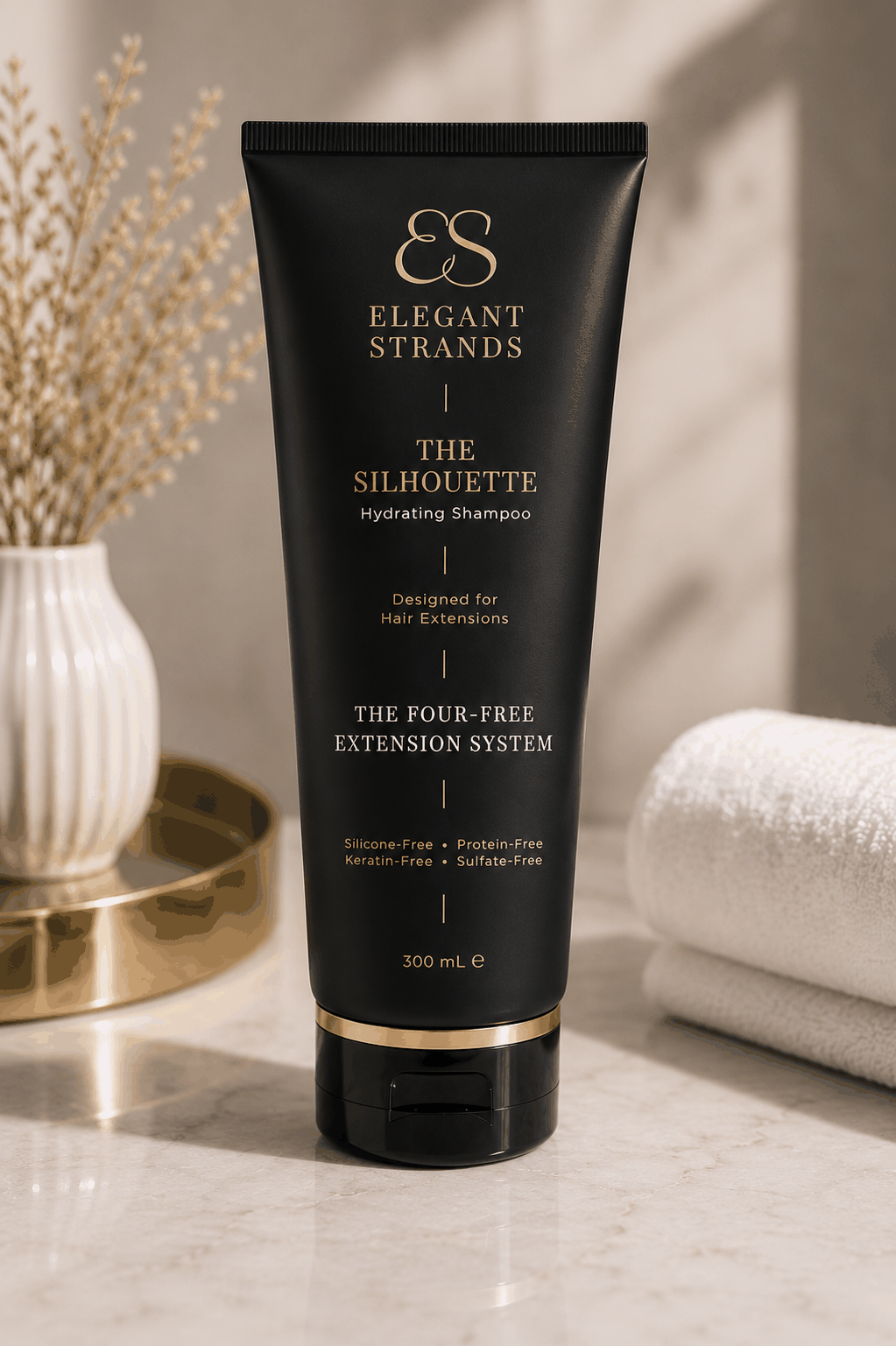
THE SILHOUETTE — Hydrating Shampoo
A 300 mL hydrating shampoo designed to gently cleanse the scalp.
THE EMBRACE — Nourishing Conditioner
A 300 mL conditioner designed to soften and smooth the mid-lengths and ends.
THE VAULT — Intensive Hair Mask
A 250 mL conditioning mask created for dry-feeling hair and improved manageability.
THE ELIXIR — Lightweight Hair Oil
A 100 mL finishing oil designed to add shine and smooth the appearance of frizz.
A small amount of compatible lightweight oil through the lengths may help improve manageability, but it should not be applied directly to extension attachment areas.
Explore our Elegant Strands Professional Haircare Collection to discover the range.
The Elegant Strands Haircare Routine
A consistent washing and conditioning routine can help keep your extensions manageable between appointments.
When using THE COMPLETE RITUAL, follow these steps.
Step 1 — Shampoo twice: Apply THE SILHOUETTE to your scalp, rinse thoroughly and repeat.
Step 2 — Apply the mask: Apply THE VAULT through the mid-lengths and ends, avoiding attachment points, then rinse.
Step 3 — Use conditioner: Follow with THE EMBRACE through the mid-lengths and ends and rinse thoroughly.
Step 4 — Finish with oil: Apply a small amount of THE ELIXIR to towel-dried mid-lengths and ends before styling.
For later washes, alternate the mask and conditioner according to your hair's needs.
Make sure your hair and attachment areas are completely dry before going to bed.
Why Extension Maintenance Matters for Comfortable Sleeping
If your extensions become uncomfortable at night, it may be time for a maintenance appointment.
As your natural hair grows, extension attachments gradually move away from the scalp.
Depending on the installation method, this can contribute to twisting, tangling or tension.
At Elegant Strands, our general maintenance recommendations are:
-
Tape-ins: Maintenance within approximately five weeks.
-
Wefts: Generally around three months, depending on the installation method and individual needs.
-
Keratin bonds: Approximately three to four months before professional removal or replacement.
-
Microbeads and nanobeads: According to your extension specialist's recommended schedule.
If you experience pain, unusual pulling, visible breakage or severe tangling, contact your specialist earlier.
Learn more about our Hair Extension Services in Craigieburn.
Common Mistakes When Sleeping with Hair Extensions
When learning how to sleep with hair extensions, try to avoid these common mistakes:
-
Going to bed with wet or damp attachments.
-
Leaving existing knots in the hair overnight.
-
Sleeping with the hair trapped underneath your body.
-
Wearing tight ponytails or buns that pull on your natural hair.
-
Applying heavy oils directly to tapes, bonds or beads.
-
Ignoring persistent discomfort around attachment points.
-
Skipping professional maintenance appointments.
-
Aggressively brushing through matting the next morning.
Small changes to your bedtime routine can make your extensions easier to maintain.
Understanding Your Hair Extension Aftercare Instructions
Hair extension aftercare recommendations can vary depending on the type of hair, the installation technique and the products recommended by your supplier.
Always follow instructions specific to your extensions rather than assuming every method requires identical care.
For independent information about consumer rights relating to products and services in Australia, visit the Australian Competition and Consumer Commission.
If you're unsure whether your extensions are sitting correctly or feel comfortable, contact your installer for an assessment.
Frequently Asked Questions About Sleeping with Hair Extensions
Can I sleep with hair extensions in a braid?
Yes. A loose braid is often a practical option for keeping longer extensions together overnight. Avoid tight braids that pull against your scalp or extension attachment areas.
Is it bad to sleep with wet hair extensions?
It's best to avoid sleeping with wet extensions. Damp hair and attachment areas can contribute to tangling, matting and discomfort. Dry your hair thoroughly before bed.
What is the best sleeping position for hair extensions?
There isn't one sleeping position that works for everyone. The goal is to avoid trapping, pulling or twisting the extensions. Keep the hair dry, gently brushed and comfortably secured before sleeping.
How to Sleep with Hair Extensions: Final Advice
Learning how to sleep with hair extensions doesn't mean completely changing the way you sleep.
Simple habits such as brushing before bed, drying the attachment areas, wearing a loose braid and following your maintenance schedule can make a meaningful difference.
Whether you wear butterfly wefts, tape-ins, keratin bonds or bead extensions, your natural hair and attachment areas should remain comfortable.
If anything feels painful or begins matting, seek professional advice rather than ignoring the problem.
With consistent care and suitable products, you can help keep your extensions soft, manageable and ready to style the following morning.
Elegant Strands Professional — Luxury Haircare, Designed for Extensions.

Written by jennylea lankester