Why Do Hair Extensions Get Tangled?
Why Do Hair Extensions Get Tangled? Causes, Prevention and Aftercare
Why do hair extensions get tangled? It's one of the most common questions extension wearers ask, especially when their hair starts knotting underneath, matting near the roots or feeling difficult to brush through.
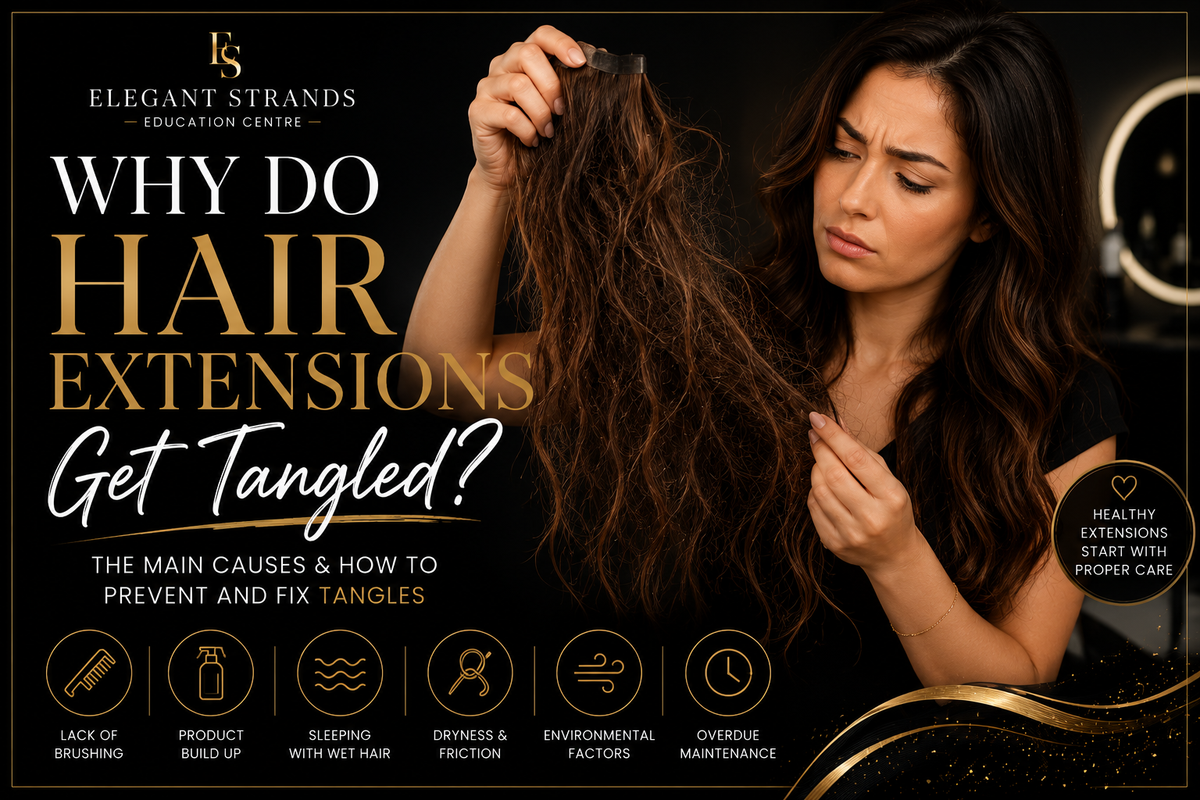
Hair extensions can tangle for several reasons, including dryness, friction, poor brushing habits, product buildup, prolonged moisture, installation issues and delayed maintenance.
At Elegant Strands, we know that tangling doesn't automatically mean the client has done something wrong. The quality of the hair, installation method, aftercare products and daily routine can all contribute.
Understanding where your extensions are tangling is an important first step towards finding the cause.
Why Do Hair Extensions Get Tangled in the First Place?
Hair extension hair is different from the natural hair growing from your scalp.
Most extension hair no longer receives the same ongoing distribution of natural scalp oils, so keeping the lengths conditioned and manageable is particularly important.
Processing, colouring, friction and repeated heat styling may also affect how extension hair feels over time.
Common reasons include:
-
Dry or rough-feeling extension lengths.
-
Friction from clothing, scarves and sleeping.
-
Not separating extension attachment areas properly.
-
Product buildup or inadequate rinsing.
-
Sleeping with wet extensions.
-
Excessive styling heat.
-
Poor installation or unsuitable attachment placement.
-
Delayed professional maintenance.
-
Hair quality or cuticle alignment issues.
Sometimes more than one factor is involved, so it's worth looking at the overall condition of the hair rather than assuming a single cause.
Why Do Hair Extensions Get Tangled at the Ends?
Tangling through the ends is often related to friction, dryness, processing history or the condition of the extension hair.
The ends typically experience more contact with clothing and styling tools, making them vulnerable to wear.
If the hair feels rough, catches against itself or forms small knots after brushing, consider whether it needs conditioning, gentler handling or a review of the hair quality.
A suitable extension brush and a lightweight finishing product may help improve manageability.
However, heavily damaged extension hair may not respond fully to conditioning alone.
When Tangling Happens Immediately After Brushing
If knots return almost straight away, even after careful brushing, there may be underlying issues with the hair's condition or quality.
Extensions that repeatedly catch on themselves can become frustrating to maintain.
Speak with your extension specialist or supplier rather than relying on increasingly heavy products to temporarily disguise the problem.
Why Do Hair Extensions Get Tangled at the Roots?
Tangling near the scalp needs particular attention because it may involve your natural hair and extension attachments.
As natural hair sheds, some shed strands can remain held within wefts, tapes, bonds or bead attachments until maintenance.
Without appropriate care, loose strands may become entangled with neighbouring hair.
Tangling near the roots may also be associated with attachment placement, twisting, excessive tension or leaving extensions installed beyond the recommended maintenance period.
If you notice matting around your attachment areas, avoid aggressively brushing or pulling at the hair.
Arrange a professional assessment so the extensions can be checked safely.
Why Do Hair Extensions Get Tangled at the Nape of the Neck?
The nape is a common area for tangling because it experiences frequent friction.
Hair at the back of the neck rubs against clothing, collars, scarves and bedding throughout the day.
Sweat, movement and sleeping positions may also contribute to knots developing in this area.
Longer extensions may become tangled underneath even when the outer layers look smooth.
To help manage tangling at the nape:
-
Brush the underneath sections gently each day.
-
Lift and separate the upper layers when brushing.
-
Pay attention to the hair near your collar.
-
Avoid sleeping with damp extension hair.
-
Keep attachment areas free from unnecessary pulling.
-
Use a loose braid when appropriate for your installation method.
If the hair is becoming matted close to the scalp, seek professional assistance.
Can Poor Hair Extension Installation Cause Tangling?
Yes, installation issues can contribute to tangling in some circumstances.
For example, unsuitable sectioning, attachment placement, excessive tension or extensions installed too close together may make it harder to separate and maintain the natural hair.
However, tangling alone doesn't establish that an installation was performed incorrectly.
Hair quality, aftercare habits, natural hair density and how long the extensions have been installed should also be considered.
If tangling is concentrated around one particular attachment or you're experiencing discomfort, ask an experienced extension specialist to inspect the area.
Persistent pain, pulling or visible hair breakage should not be ignored.
Can Hair Extension Quality Affect Tangling?
Hair quality is another important consideration.
Extension hair can vary depending on its processing, colouring, cuticle condition and handling before installation.
Some extensions remain smooth and manageable for a long time, while others may become rough or difficult to detangle much sooner.
Repeated colouring, chemical processing or excessive heat may increase friction between strands.
When evaluating hair quality, consider how the extensions behave after washing and drying, not just how they feel when first removed from the packaging.
If your extensions consistently tangle despite appropriate aftercare, ask your supplier or installer to review their condition.
Why Do Hair Extensions Get Tangled After Washing?
Washing can reveal tangles that were already developing, but the washing technique itself can also contribute.
Rubbing the lengths together, piling extensions on top of the head or failing to rinse thoroughly may make them more difficult to manage.
To reduce tangling:
-
Gently brush the extensions before washing.
-
Wet the hair thoroughly using lukewarm water.
-
Cleanse the scalp without aggressively rubbing the lengths.
-
Let the hair fall naturally downwards.
-
Rinse shampoo and conditioning products thoroughly.
-
Apply suitable conditioning products to the mid-lengths and ends.
-
Detangle carefully according to your installation method.
-
Dry the attachment areas thoroughly.
Avoid sleeping with wet extensions, especially if the hair is prone to tangling underneath.
How to Brush Hair Extensions Without Causing Damage
Brushing technique is essential for extension aftercare.
Start by using a brush suitable for your particular extension method.
Hold the hair to reduce pulling on the attachments, begin at the ends and work upwards through manageable sections.
Take extra care around bonds, tapes, beads and weft rows.
Don't force the brush through resistant knots or drag it across the attachment areas.
For longer extensions, separate the hair into sections so you can reach the underneath layers.
If you encounter matting near the scalp, leave it for a professional rather than trying to rip it apart.
Choosing Products for Tangled Hair Extensions
Why do hair extensions get tangled even when they're being washed regularly?
Sometimes the routine isn't providing enough conditioning for the lengths, while in other cases the products may be leaving buildup or interfering with extension attachments.
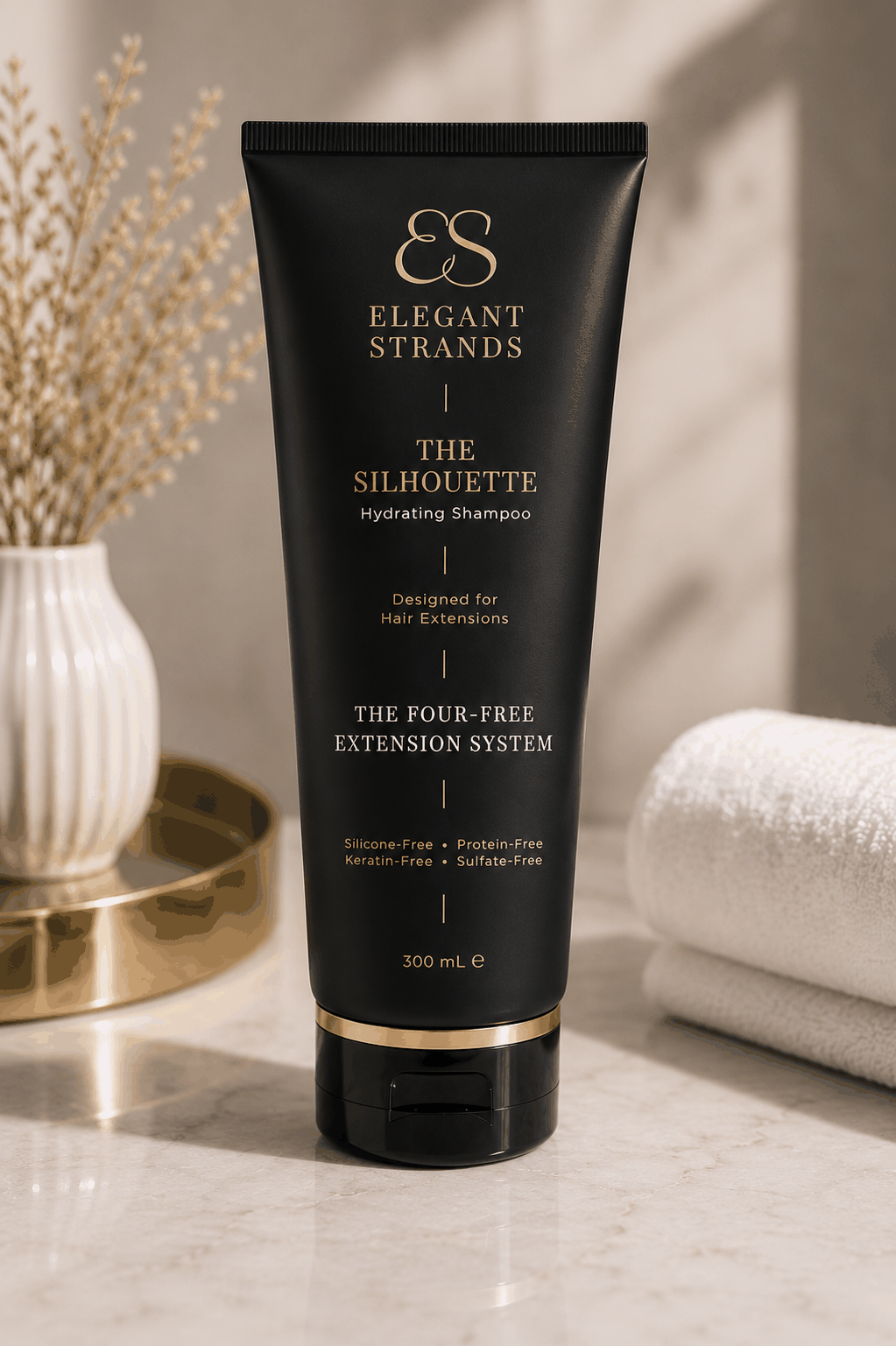
Elegant Strands Professional was developed with extension aftercare in mind.
Our Four-Free Extension System™ is formulated without:
-
Added protein
-
Keratin
-
Silicones
-
Sulfates
-
Parabens
-
Drying alcohols
These exclusions describe our own formulation approach. They don't mean that all products containing these ingredients necessarily cause tangling or damage.
Our professional collection includes four complementary products.
THE SILHOUETTE — Hydrating Shampoo
A 300 mL shampoo designed to cleanse the scalp as part of a regular extension-safe washing routine.
THE EMBRACE — Nourishing Conditioner
A 300 mL conditioner designed to soften the mid-lengths and ends and support easier manageability.
THE VAULT — Intensive Hair Mask
A 250 mL conditioning treatment designed for dry-feeling lengths, helping hair feel softer and smoother.
THE ELIXIR — Lightweight Hair Oil
A 100 mL finishing oil designed to smooth the appearance of frizz and add shine.
Explore our extension-safe haircare collection to discover the range.
How to Use the Elegant Strands Haircare Routine
The complete Elegant Strands routine is designed to make regular extension aftercare straightforward.
Step 1 — Shampoo twice: Apply THE SILHOUETTE to your scalp, rinse and repeat.
Step 2 — Hair mask: Apply THE VAULT through the mid-lengths and ends, avoiding attachments, then rinse.
Step 3 — Conditioner: Follow with THE EMBRACE on the mid-lengths and ends and rinse thoroughly.
Step 4 — Hair oil: Apply a small amount of THE ELIXIR to towel-dried mid-lengths and ends before styling.
For later washes, alternate the mask and conditioner according to your hair's needs.
Avoid applying conditioning products directly to tape tabs, keratin bonds or other attachment areas unless your specialist specifically recommends doing so.
Can Sleeping Habits Cause Hair Extensions to Tangle?
Sleeping habits can contribute to tangling, particularly at the nape and underneath layers.
Loose hair may rub against bedding and become knotted while you move during sleep.
Before bed:
-
Make sure your extensions are dry.
-
Gently remove existing knots.
-
Consider a loose braid or comfortable low hairstyle.
-
Avoid tight hair ties that create tension.
-
Keep the hair positioned comfortably without trapping it underneath you.
A smooth pillowcase may reduce friction, although it won't prevent every knot.
Consistent brushing and regular maintenance remain important.
Does Missing Hair Extension Maintenance Cause Matting?
Delayed maintenance can increase the risk of tangling around extension attachment areas.
Your natural hair continues growing and shedding while the extensions remain installed.
As the attachment points grow out, they may move, twist or become more difficult to manage.
At Elegant Strands, our general maintenance guidance is:
-
Tape-ins: Within approximately five weeks.
-
Wefts: Generally around three months, depending on the method and individual circumstances.
-
Keratin bonds: Approximately three to four months before professional removal or replacement.
-
Microbeads and nanobeads: According to your installation and natural hair growth.
Individual maintenance schedules vary.
For information about installation methods and appointments, explore our Hair Extensions Craigieburn page.
When Should Tangled Extensions Be Professionally Removed?
Occasional knots in the lengths can often be managed with gentle detangling.
However, severe matting close to the scalp, pain, tension or visible damage around attachments warrants professional attention.
Never cut through attachment areas or pull tightly on matted natural hair in an attempt to remove extensions yourself.
A specialist can assess whether the extensions need maintenance, repositioning or removal.
Where there is significant scalp irritation, persistent pain or hair loss, consult a qualified healthcare professional.
Frequently Asked Questions About Tangled Hair Extensions
Why do hair extensions get tangled even after brushing?
Extensions may continue tangling because of dryness, friction, product buildup, hair quality or underlying knots. If tangles quickly return after gentle brushing, ask your extension specialist to assess the hair and your aftercare routine.
Can tangled hair extensions be repaired?
Mild tangling may improve with careful detangling and suitable conditioning. Severe matting, particularly near the scalp or attachment points, should be assessed professionally. Extensions that are heavily damaged may need replacing.
Does tangled hair mean my extensions were installed incorrectly?
Not necessarily. Installation problems can contribute to tangling, but hair quality, friction, brushing, washing and maintenance are also possible factors. A professional assessment can help identify the likely cause.
Why Do Hair Extensions Get Tangled? Final Advice
Why do hair extensions get tangled? There isn't always one simple explanation.
Tangling may come from dryness, friction, hair quality, washing habits, poor attachment placement, natural hair shedding or delayed maintenance.
Understanding where the tangling happens and how quickly it develops can help identify possible causes.
Regular gentle brushing, suitable haircare, proper drying and professional maintenance are important parts of managing extensions.
If tangling becomes persistent, painful or difficult to control, don't assume it's normal. Have your extensions assessed before the problem worsens.
At Elegant Strands, we want clients to enjoy beautiful extensions while also protecting the condition of their natural hair.
Elegant Strands Professional — Luxury Haircare, Designed for Extensions.

Written by jennylea lankester