Why Is My Hair So Frizzy? Causes, Solutions & Haircare Tips
Why Is My Hair So Frizzy? Causes, Haircare Tips and Solutions
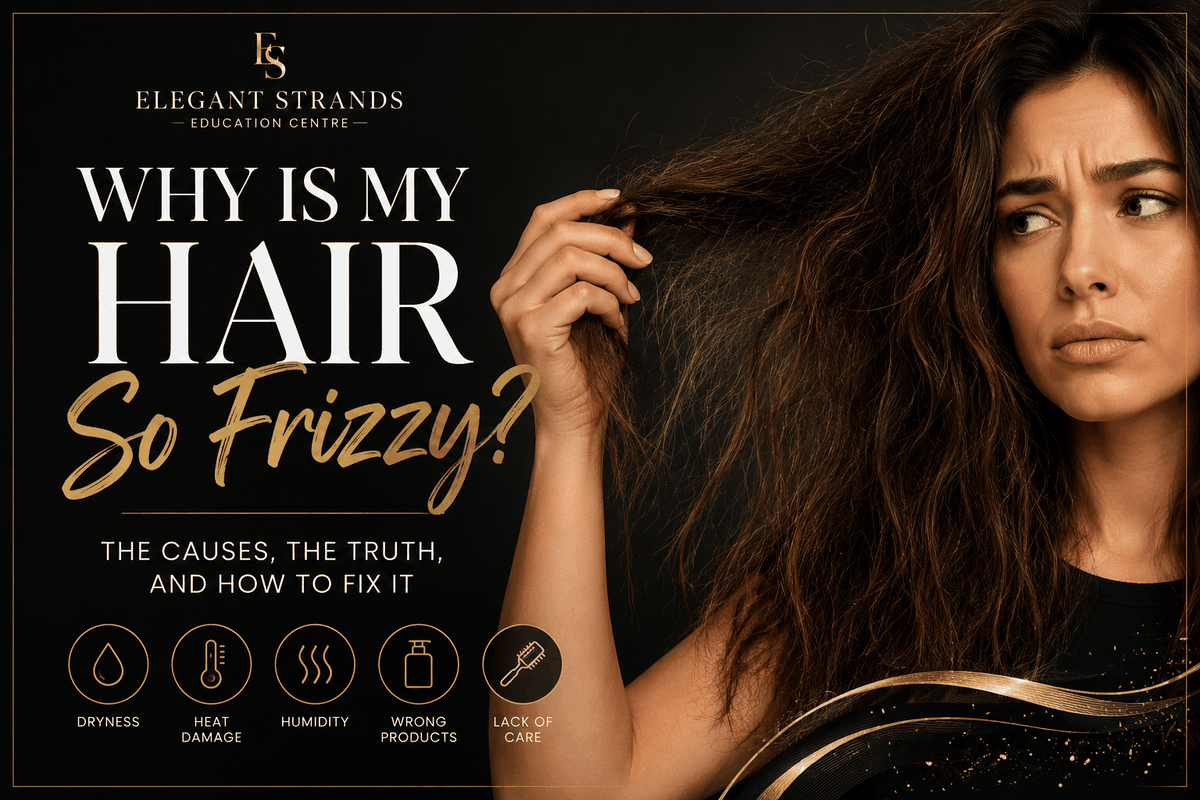
Why is my hair so frizzy? If you've ever spent time washing, blow-drying or straightening your hair only to have it turn fluffy or frizzy shortly afterwards, you're certainly not alone.
Frizz can affect straight, wavy, curly, coily, colour-treated and chemically treated hair. It can also affect hair extensions, especially if the extension hair has undergone significant processing or is exposed to frequent heat styling.
Understanding what causes frizz is the first step towards choosing a haircare routine that suits your hair.
At Elegant Strands Professional, we believe frizz control isn't about forcing every hair type to look completely straight. It's about helping hair feel softer, more manageable and easier to style.
Why Is My Hair So Frizzy Even After Washing?
One of the most common causes of frizz is an uneven hair surface combined with environmental moisture and friction.
The outer layer of the hair shaft is called the cuticle. When the hair's surface is rough or weathered, individual strands can catch against one another and become less smooth.
Humidity can also affect the way hair holds its shape.
Hair absorbs moisture from the surrounding air, and that can influence its internal bonds and cause strands to change shape, expand or lose their styled finish.
This is why freshly styled hair can become frizzy during humid weather, even when you've used conditioner.
Frizz Doesn't Always Mean Your Hair Is Damaged
Naturally curly and coily hair can have more visible frizz because of its shape, texture and response to humidity.
That doesn't automatically mean something is wrong with the hair.
Frizz can simply be part of your natural texture.
However, excessive breakage, roughness and difficulty detangling may suggest that the hair needs a gentler routine or an assessment of possible damage.
Why Is My Hair So Frizzy After Blow-Drying?
A common frustration is hair looking smooth while wet but becoming fluffy after blow-drying.
Several factors may contribute.
Blow-Drying Against the Hair's Direction
Blowing hair in different directions can make the finish look less smooth.
Using the dryer nozzle to direct airflow down the hair shaft and working through manageable sections may help create a more polished result.
Not Using Enough Tension When Styling
For people trying to achieve a smooth blow-dry, the brush, dryer direction and amount of controlled tension can affect the finished style.
Too little tension may leave natural texture more visible.
However, excessive pulling can also cause breakage, especially in fragile hair.
High Heat and Repeated Styling
Repeated exposure to excessive heat may damage the hair surface and contribute to dryness or breakage.
Use an appropriate temperature and a compatible heat-protection product when styling.
Hair Texture and Humidity
Some hair naturally returns towards its original texture after blow-drying, particularly in humid conditions.
A smooth result may require a technique suited to your particular curl pattern rather than simply applying more heat.
Why Is My Hair So Frizzy in Humid Weather?
Humidity is a major contributor to frizz for many hair types.
When moisture from the air interacts with hair, it can affect the hydrogen bonds that help maintain a temporary hairstyle.
As a result, freshly straightened or blow-dried hair may start changing shape.
Hair that is more porous or has undergone colouring and chemical processing can react differently to moisture compared with less processed hair.
While suitable styling products may help manage the appearance of frizz, no product can guarantee that every hair type will remain perfectly smooth in all humidity conditions.
Can Dry Hair Cause Frizz?
Dry-feeling hair often appears rougher and may be harder to detangle or style.
Insufficient conditioning, repeated heat exposure, environmental wear and chemical processing may contribute to this condition.
A suitable conditioner or hair mask can improve lubrication and softness, making the strands easier to manage.
However, frizz doesn't always mean the hair needs more oil.
Adding excessive oil without addressing your washing, conditioning and styling routine may leave hair feeling heavy without solving the underlying issue.
Why Is My Hair So Frizzy at the Ends?
The ends are often the oldest and most weathered part of your natural hair.
They may have experienced years of brushing, heat styling, colouring and exposure to the environment.
This can contribute to roughness, split ends and visible frizz.
If your ends are severely split or breaking, conditioning may improve their appearance temporarily, but it cannot permanently repair split strands.
Regular trims by a qualified hairdresser may be needed for damaged natural hair ends.
For extensions, persistent roughness at the ends may require a review of the hair quality or replacement.
Why Hair Extensions Can Become Frizzy
Hair extensions can develop frizz for several reasons, including friction, processing, styling wear and the condition of the extension hair itself.
Unlike natural growing hair, extension lengths don't receive continuous oil distribution from the scalp.
That makes appropriate conditioning and gentle handling important.
Other factors include:
-
Excessive heat styling.
-
Friction from clothing and bedding.
-
Rough brushing or detangling.
-
Chemical or colour processing.
-
Exposure to salt water and swimming pool conditions.
-
Hair quality and cuticle condition.
-
Using products unsuitable for the extension hair.
Sometimes frizz becomes particularly noticeable after the first wash or blow-dry.
That can reveal the extension hair's underlying texture or processing history.
It doesn't automatically mean the client has damaged the extensions through poor aftercare.
Can Hair Extensions Be Frizzy Because of Poor Hair Quality?
Yes. Hair quality can contribute to persistent frizz.
Extensions differ in their original texture, processing, cuticle condition and previous colouring.
Some extension hair has a naturally straighter finish, while other hair may expand, wave or become fluffier after washing.
If the extensions become extremely rough or tangled despite appropriate care, consult the hair supplier or extension specialist.
Increasing the amount of conditioner or oil isn't always an effective solution for poor-quality or heavily damaged hair.
How to Reduce Frizzy Hair Without Overcomplicating Your Routine
A consistent approach usually works better than changing products every few days.
1. Choose Shampoo Suitable for Your Hair
Use a shampoo appropriate for your scalp and hair type.
Cleanse the scalp thoroughly while avoiding unnecessary friction through the lengths.
2. Condition the Mid-Lengths and Ends
Conditioner helps improve the feel of the hair and reduces friction between strands.
Apply it where the lengths need it, rather than overloading your scalp or extension attachments.
3. Use a Hair Mask When Needed
An intensive conditioning mask may help dry-feeling hair become softer and more manageable.
Follow the product directions and adjust the frequency to suit your hair.
4. Dry the Hair Gently
Avoid aggressively rubbing wet hair with a towel.
Blot or gently squeeze away excess moisture before detangling.
5. Use Controlled Heat Styling
For a smoother blow-dry, work in sections and direct the airflow down the hair shaft.
Use an appropriate temperature and avoid unnecessary repeated passes with hot tools.
6. Finish with a Suitable Hair Oil
A lightweight hair oil can help smooth the appearance of flyaways and add shine.
Start with a small amount, focusing on the mid-lengths and ends.
Elegant Strands Professional's Four-Free Extension System™
At Elegant Strands Professional, we developed a coordinated haircare collection with hair extension wearers in mind.
Our signature Four-Free Extension System™ is formulated without:
-
Added protein
-
Keratin
-
Silicones
-
Sulfates
-
Parabens
-
Drying alcohols
These ingredient exclusions reflect our formulation approach. They don't mean that all products containing those ingredients cause frizz or damage.
Our range is designed for hair extensions and is also suitable for natural, coloured, bleached and chemically treated hair, including nanoplasty-treated hair.
Our Four Products for a Smoother Haircare Routine
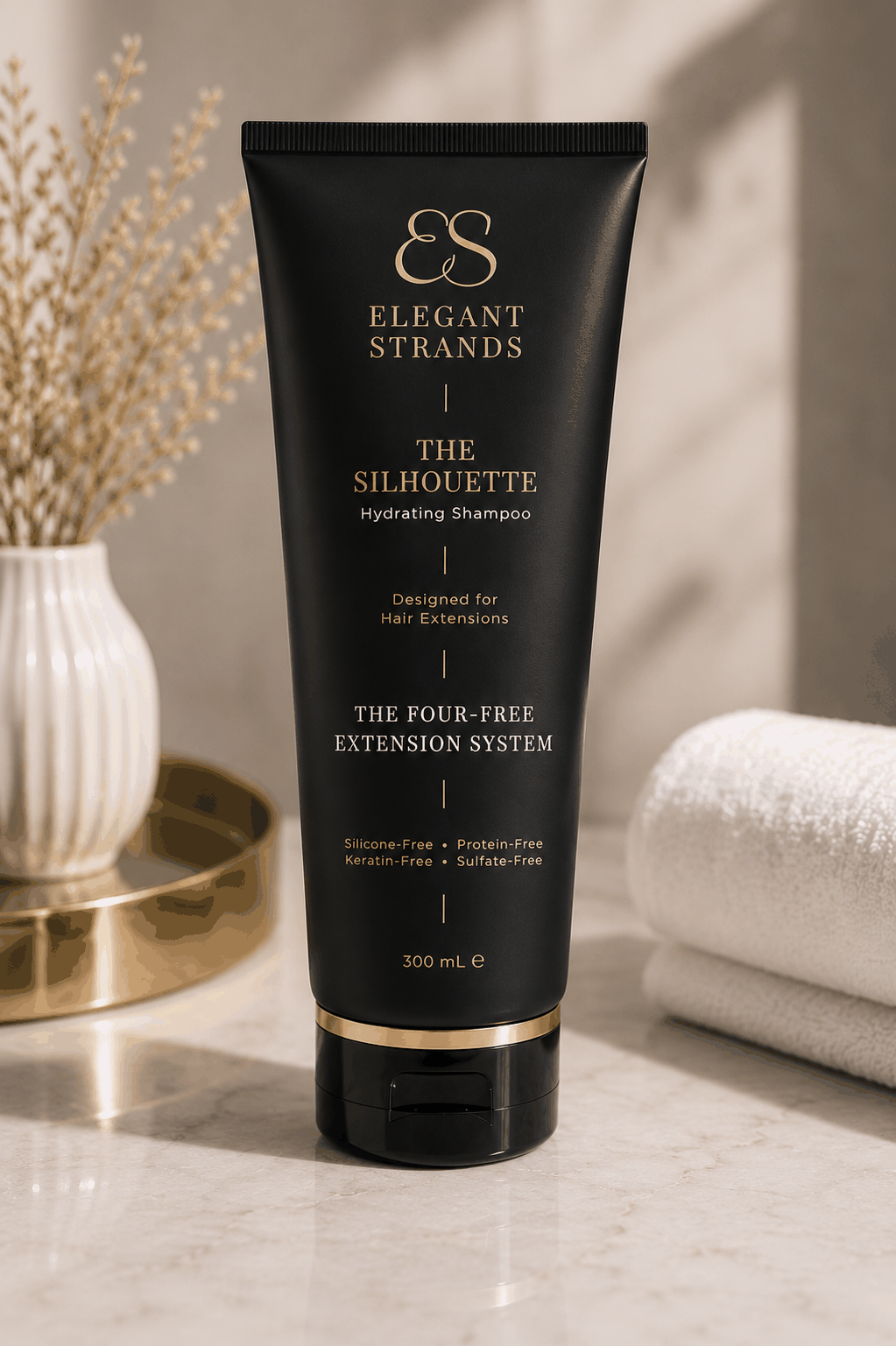
THE SILHOUETTE — Hydrating Shampoo | 300 mL
A hydrating shampoo designed to cleanse the scalp as part of a regular haircare routine.
THE EMBRACE — Nourishing Conditioner | 300 mL
A nourishing conditioner designed to soften and smooth the mid-lengths and ends.
THE VAULT — Intensive Hair Mask | 250 mL
An intensive conditioning treatment designed to improve softness and manageability in dry-feeling hair.
THE ELIXIR — Lightweight Hair Oil | 100 mL
A lightweight finishing oil designed to smooth the appearance of frizz and add shine.
Together, these products create THE COMPLETE RITUAL.
Browse our Elegant Strands Professional Haircare Collection to explore the range.
The Elegant Strands Haircare Ritual for Frizzy Hair
Why is my hair so frizzy even when I'm using quality products?
Sometimes the issue isn't the brand but how the products are being used.
When using THE COMPLETE RITUAL, we recommend the following routine.
Step 1 — Shampoo twice: Apply THE SILHOUETTE to your scalp, rinse and repeat.
Step 2 — Apply THE VAULT: Use the intensive hair mask through the mid-lengths and ends, then rinse thoroughly.
Step 3 — Follow with THE EMBRACE: Apply conditioner to the mid-lengths and ends, then rinse.
Step 4 — Finish with THE ELIXIR: Apply a small amount to towel-dried lengths before blow-drying and styling.
For later washes, alternate the mask and conditioner according to your hair's needs.
For extension wearers, keep conditioning products and oils away from attachment areas unless your stylist recommends otherwise.
How to Reduce Frizz in Hair Extensions
If you wear extensions, appropriate handling is just as important as your haircare products.
To help reduce frizz:
-
Brush gently from the ends upwards.
-
Support the hair near attachment points.
-
Avoid excessive styling heat.
-
Use suitable conditioner through the lengths.
-
Dry extension attachment areas thoroughly.
-
Avoid sleeping with wet extensions.
-
Reduce unnecessary friction while sleeping.
-
Attend maintenance appointments as recommended.
For advice on different extension methods, visit our Hair Extensions Craigieburn page.
Do Silicones, Protein or Sulfates Cause Frizzy Hair?
There is no simple rule that every silicone, protein or sulfate makes hair frizzy.
These ingredients can serve different purposes within a formulation.
Some silicones are used to improve slip and smoothness, while protein ingredients may be included in products aimed at temporarily improving the feel of processed hair.
Sulfates can be effective cleansing agents.
How a product performs depends on the full formula, the amounts used, your hair type and how you apply it.
For independent information about cosmetic ingredient labelling in Australia, visit the Australian Industrial Chemicals Introduction Scheme (AICIS).
When Frizz May Be a Sign of Hair Damage
Not all frizz is a sign of damage, but changes in hair condition are worth paying attention to.
Signs that may indicate mechanical or chemical wear include:
-
Excessive breakage.
-
Roughness that persists after conditioning.
-
Split or frayed ends.
-
Unusual difficulty detangling.
-
Significant changes following chemical processing.
-
Increasing brittleness after repeated heat styling.
If you notice substantial breakage or changes in your scalp or hair health, seek advice from an appropriately qualified professional.
Frequently Asked Questions About Frizzy Hair
Why is my hair so frizzy after washing?
Frizz after washing can be related to your natural hair texture, humidity, friction, rough towel drying, insufficient conditioning or existing hair damage. A suitable conditioner, gentle drying and controlled styling technique may help.
Can hair extensions become frizzy after blow-drying?
Yes. Some extensions have a natural texture that becomes more visible after washing, while processed or weathered extension hair may appear rough or fluffy. Hair quality, heat settings and drying technique can all contribute.
Does hair oil stop frizz permanently?
No. Hair oil may temporarily smooth the appearance of flyaways and add shine, but it doesn't permanently change the hair's natural texture or reverse significant damage. Results depend on the product, hair type and styling routine.
Why Is My Hair So Frizzy? Final Advice
So, why is my hair so frizzy? The answer may involve your natural texture, humidity, the condition of your hair, styling habits or the products you're using.
For extension wearers, hair quality and processing history can also play an important role.
The aim isn't to eliminate every natural wave or flyaway. It's to find a routine that helps your hair feel soft, manageable and comfortable to style.
At Elegant Strands Professional, we've developed a coordinated haircare range designed with extension aftercare in mind while also supporting natural and colour-treated hair routines.
With suitable products, gentle handling and realistic expectations, you can work towards smoother-looking, more manageable hair.
Elegant Strands Professional — Luxury Haircare, Designed for Extensions.

Written by jennylea lankester